UK vaping laws: what the rules actually say in 2026

Few subjects generate as much confusion in a British vape shop as the legal framework. Between a headline about a ban, a trade blog listing a dozen dates and a customer certain that vaping itself has been outlawed, the picture blurs fast. The UK vaping laws in force in 2026 are in fact readable, provided you separate what already applies from what Parliament has merely taken the power to do.
What the UK vaping laws cover in 2026
Four separate bodies of rules sit on top of each other, and confusing them is the single most common mistake. Product standards come from the Tobacco and Related Products Regulations 2016. Age of sale comes from its own regulations. Single-use devices were dealt with by environmental legislation in 2025. The Tobacco and Vapes Act 2026 sits above all of that.
None of these replaced the others. A device on a British shelf today has to satisfy the product limits set in 2016, the reusability definition set in 2025 and the sales rules that keep arriving. That layering is why two shops can give you two different answers to the same question.
The practical consequence for an adult buyer is simple. What you can legally buy is narrower than it was three years ago, and the packaging, the tank size and the bottle in your hand are all evidence of a rule rather than a marketing choice.
Age of sale is the oldest rule and the firmest
It is illegal to sell vaping or nicotine products to anyone under 18 anywhere in the United Kingdom, and it is equally illegal for an adult to buy them on a minor’s behalf. That proxy purchasing offence is often forgotten and it applies in full to online orders.
Retailers are expected to verify age, which is why serious online sellers run an age check at checkout rather than a tick box. A site that lets you through without any verification at all is telling you something about how it treats the rest of its obligations.
This rule is the reason we write nothing on this site for readers under 18, and the reason a legitimate British shop will refuse a sale rather than argue about it.
Single-use devices have been off sale since June 2025
The ban on single-use vapes came into force across the United Kingdom on 1 June 2025. It is illegal for a business to sell, supply, offer to supply or even stock them for sale, online and in shops, whether or not the device contains nicotine.
The definition matters more than the slogan. A vape counts as single-use if it either has a battery you cannot recharge or is not refillable. To be reusable it needs a rechargeable battery, a refillable container such as a pod or tank, and a coil that the user can remove and replace where the device has one.
There is a second limb that catches a lot of borderline products. The refills and the coils have to be separately available to buy. A device sold with no replacement pods on the market anywhere is not made lawful by the presence of a charging port.
Enforcement in England sits with local authority Trading Standards, who can issue stop notices and compliance notices, seize stock and escalate to criminal charges for persistent offenders. The shift that followed this ban reshaped the whole market, as we cover in our round-up of the year in vaping.
Product limits: tank size, strength and bottle volume
The Tobacco and Related Products Regulations 2016 still govern what a compliant product looks like. Tanks are restricted to a capacity of no more than 2 ml, nicotine strength is capped at 20 mg per ml, and nicotine-containing e-liquid sold in a single refill container is limited to 10 ml.
This is why a tank advertised abroad at 5 ml arrives in Britain in a 2 ml version of the same product, and why large bottles on British shelves are nicotine free shortfills rather than ready-mixed liquid. Neither is a retailer being awkward with you.
Products also have to be notified to the MHRA before they go on sale, with packaging carrying the required warnings and information. The presence of those warnings is the quickest visual check an adult buyer can make, and it is one of the reasons the channel you buy through matters, a question we look at in our guide on where to buy a vape.
The Tobacco and Vapes Act 2026 and what comes next
The Tobacco and Vapes Bill received Royal Assent on 29 April 2026. Its best known measure concerns tobacco rather than vaping: it will be illegal to sell tobacco to anyone born on or after 1 January 2009.
For vaping, the Act bans the advertising and sponsorship of vapes and nicotine products, and takes powers to restrict packaging, branding and displays designed to appeal to children. It also introduces stronger enforcement powers, including the ability to set up a retail licensing scheme and to tackle illicit sales.
The distinction between a measure and a power is worth holding on to. Several parts of the Act are enabling provisions that require further regulations before anything changes in a shop, and the government launched a consultation on 13 February 2026 covering extended smoke-free places and new vape-free places.
Separately, HM Revenue and Customs is introducing Vaping Products Duty, a new excise duty on vaping liquid, from 1 October 2026, with registrations having opened on 1 April 2026. From the same date, vaping duty stamps come into the supply chain, with transitional stamps available to businesses only until 30 November 2026.
Where you can and cannot vape
Vaping is not covered by smokefree legislation in the way smoking is, which surprises people. Public Health England guidance has long treated e-cigarette use in public places and workplaces as a matter for the organisation concerned rather than a criminal prohibition.
In practice that means the rule you meet is usually a private one. Train operators, airports, employers, hospitals, pubs and shopping centres each set their own policy, and staff enforce it as a condition of entry rather than as a law.
That may change in scope: the Act takes powers to create vape-free places, and the February 2026 consultation asked exactly where those should apply. Until commencement regulations land, the honest answer is that you follow the sign on the wall, and where there is no sign you ask.
Reading the UK vaping laws without getting lost
The reliable method is to check the source rather than the summary. Trade blogs are quick and often accurate, but they compress powers, consultations and commenced provisions into a single list of dates, and that is where errors creep in.
Anything about product standards is set by the 2016 regulations and the MHRA. Anything about the single-use ban is environmental legislation enforced by Trading Standards. Anything about duty is HMRC. Anything about advertising, packaging or licensing sits under the 2026 Act and usually needs secondary regulations before it bites.
Nothing in the current UK vaping laws bans vaping itself for adults. What has changed is the shape of what can lawfully be sold, and the direction of travel is towards tighter control of marketing, retail and supply rather than towards prohibition. Our regulation section tracks each step as it is confirmed.
Common questions about UK vaping laws
Are vapes banned in the United Kingdom?
No. Reusable vaping products remain legal to sell to adults. Only single-use devices, banned since 1 June 2025, have been taken off the market.
Can a shop sell a vape to a 17 year old?
No. Sale to anyone under 18 is illegal across the United Kingdom, and buying on behalf of a minor is a separate offence.
Why are British tanks smaller than the ones I see abroad?
Because the 2016 regulations cap tank capacity at 2 ml. Manufacturers produce a compliant version specifically for this market.
Is advertising for vapes still allowed?
The Tobacco and Vapes Act 2026 bans the advertising and sponsorship of vapes and nicotine products. Detailed implementation follows through regulations made under the Act.
When does the new duty on vaping liquid start?
Vaping Products Duty applies from 1 October 2026, with business registrations having opened on 1 April 2026.
What this means for an adult vaper
Very little of this framework is aimed at you directly. Age of sale, product notification, tank limits, duty and licensing are obligations placed on manufacturers and retailers, and the only thing that reaches the counter is a narrower, better documented range of products.
The one habit worth building is checking the packaging. Required warnings, a stated strength within the legal cap, a bottle within the legal volume and refills available for the device you own are all signs of a product that has been through the process rather than around it.
Read the UK vaping laws as three questions rather than a list of dates: is this product compliant, is this seller compliant, and does this rule already apply or is it a power waiting on regulations. That is enough to navigate 2026 without relying on a headline.
Editorial content for adult readers only. Vaping products usually contain nicotine, a substance that causes addiction. Not for sale to under-18s in the United Kingdom. This article is not a buying recommendation.
Further reading
 Tests and hardware
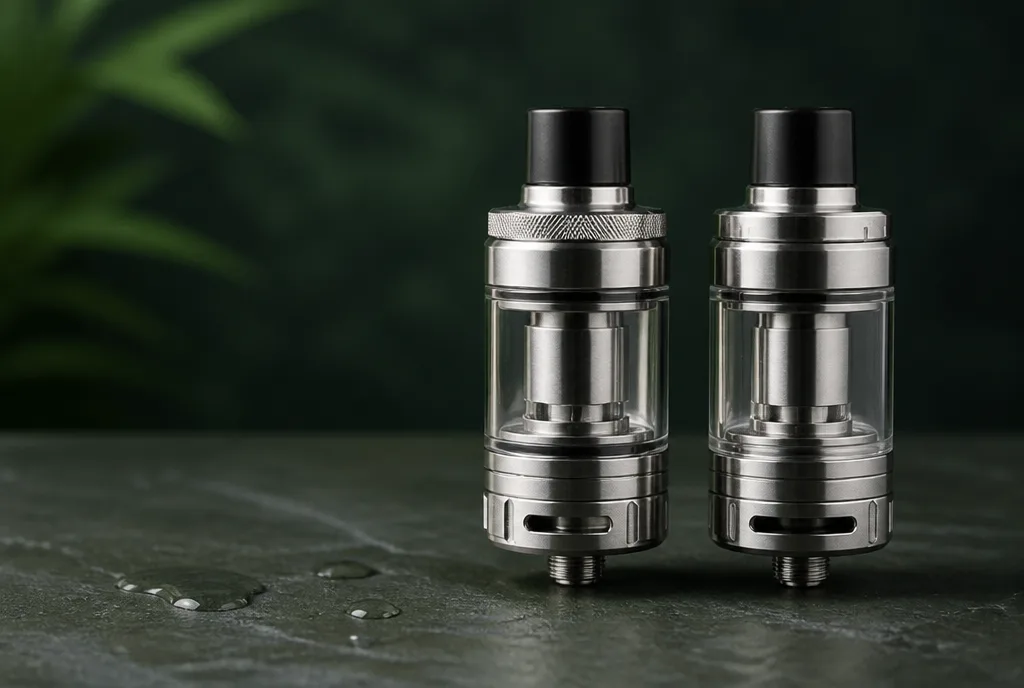
 Vaporesso iTank tanks compared, which model to pick
Vaporesso iTank, iTank 2, iTank T or iTank M? Airflow, GTi coils, draw style and the 2 ml UK edition compared, to pick the right iTank tank.
 Tests and hardware
 Geekvape Zeus tanks, the Z range decoded model by model
Geekvape Zeus, now the Z range, decoded. Z Sub-ohm, SE, Max, Nano 3 and ZX II RTA, which coils fit each tank and the UK 2 ml limit.
 New releases
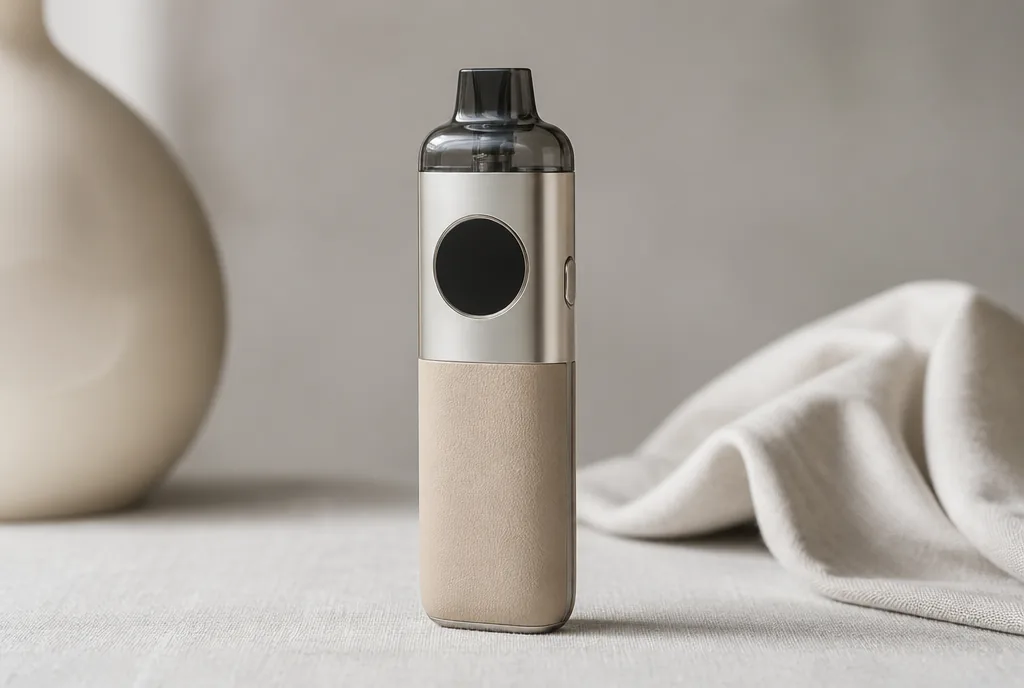
 Geekvape Wenax Q2, what to know about this 30W pod kit
Geekvape Wenax Q2 explained. 1250mAh, 30W, 2 ml Q pods in the UK and one button, plus how it differs from the Wenax Q and the Wenax Q Pro.